Fiber, Explained: Where It Shows Up on Your Plate
A plain-language reference to what fiber is and which everyday foods contain it. Includes easy ways to add more variety to meals you already make.
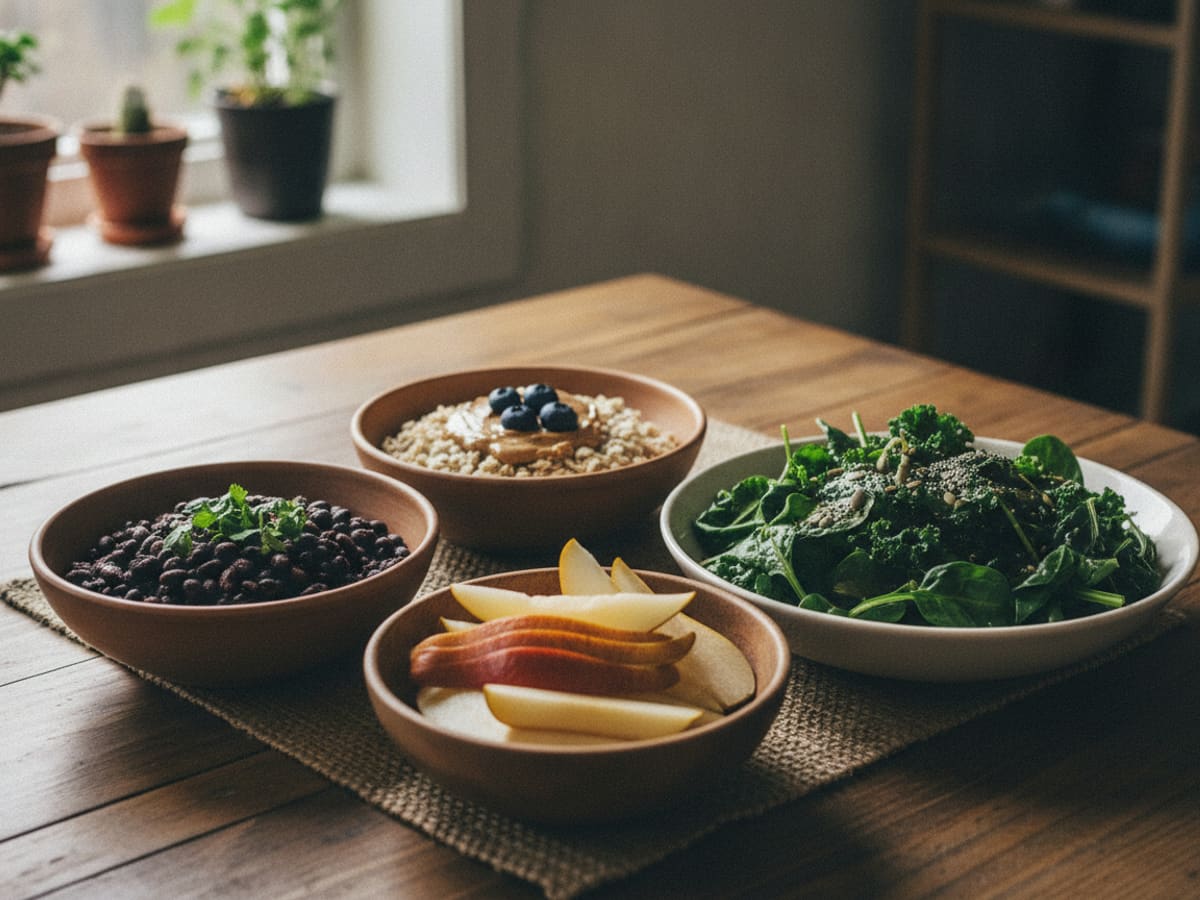
What fiber is, in plain terms
Fiber is the part of plant foods that your body can't fully break down. Instead of being absorbed the way most nutrients are, it travels through your digestive system largely intact. That might sound like it does nothing, but fiber plays a steady, behind-the-scenes role in how food moves through you and how full you feel after a meal.
You'll often hear about two kinds. Soluble fiber dissolves in water and turns into a soft, gel-like texture. Insoluble fiber doesn't dissolve and tends to add bulk. Most plant foods contain a mix of both, so you don't need to sort your plate into categories. Eating a variety of plants covers it.
Fiber only comes from plants. Meat, fish, eggs, and dairy contain none, which is one reason a plate built around those foods alone can be low in it.
Where fiber turns up in everyday foods
You probably eat more fiber-containing foods than you realize. It hides in plain sight, often in foods you already like. Here are some common places to look:
- Beans, lentils, and chickpeas, whether in soup, chili, salads, or spread on toast
- Whole grains such as oats, brown rice, barley, popcorn, and whole wheat bread or pasta
- Fruits, especially berries, pears, apples, and oranges, and especially when you eat the skin or the whole fruit instead of just the juice
- Vegetables such as broccoli, carrots, leafy greens, peas, and sweet potatoes
- Nuts and seeds, including almonds, sunflower seeds, chia, and flax
A few clues can help you notice fiber in the wild. Foods that look less processed, with skins, seeds, hulls, or visible bits of grain, usually keep more of their fiber. When a food is refined, such as white flour or peeled and juiced fruit, some of that fiber gets removed along the way.
Texture can be a hint too. Chewy, crunchy, or hearty foods often have more fiber than very soft, smooth ones. It isn't a perfect rule, but it's a handy starting point.
Reading the fiber line on a label
Packaged foods list fiber on the Nutrition Facts panel, under total carbohydrate. You'll see a line for dietary fiber, usually in grams, and often a percent of the daily value next to it.
Here is a simple way to use it:
- Find "Dietary Fiber" under "Total Carbohydrate."
- Check the serving size at the top of the label. The fiber number applies only to that portion.
- Look at the percent daily value. As a general guide, 5 percent or less is considered low, and 20 percent or more is considered high.
- Scan the ingredient list. When "whole wheat," "whole oats," or another whole grain appears first, the food is more likely to contain meaningful fiber.
Be a little cautious with front-of-package wording. Terms like "multigrain" or "made with whole grain" don't always mean much fiber is inside. The label on the back tells you more.
Easy swaps that keep meals familiar
You don't need to overhaul how you eat. Small changes that keep the same flavors and routines tend to be easier to stick with. A few ideas:
- Choose whole grain bread, pasta, or tortillas instead of the refined version, or mix half and half if the change feels abrupt.
- Eat the whole piece of fruit instead of drinking juice.
- Leave the skin on potatoes, apples, and pears when it's pleasant to eat.
- Stir beans or lentils into soups, tacos, pasta sauce, or rice dishes.
- Swap white rice for brown rice, barley, or another whole grain now and then.
- Top yogurt or oatmeal with berries, nuts, or seeds.
- Snack on popcorn, raw vegetables with hummus, or a handful of nuts instead of chips or crackers made with refined flour.
- Add an extra vegetable to meals you already make, like spinach in eggs or shredded carrots in a sandwich.
Pick one or two that appeal to you and start there. A familiar meal with one small upgrade is more likely to become a habit than a brand-new menu.
Going gradually and drinking along the way
If you suddenly eat much more fiber than usual, your digestive system may complain. Gas, bloating, or an uncomfortable, full feeling are common when the change happens fast. Your body usually adjusts better when you give it time.
Add fiber-rich foods slowly, over a couple of weeks, rather than all at once. You might add one new food every few days and notice how you feel.
Fluids matter too. Fiber absorbs water as it moves through you, so drinking enough throughout the day helps it do its job comfortably. Water, herbal tea, and the water in foods like soups and fruit all count. There's no need for a precise number, just keep a glass or bottle nearby and sip regularly.
Chewing well and eating at an unhurried pace can also make high-fiber foods feel easier on your stomach.
When to ask a professional about your diet
Most people can explore more fiber-rich foods on their own, but some situations call for personal guidance. Every body is different, and what works for one person may not suit another.
A professional can also help if you have food allergies or follow a restricted diet and want to make sure you're getting enough variety. Bringing a short list of what you usually eat in a few days can make that conversation more useful.